A hydraulic pump rarely fails without warning. Long before it stops working completely, it usually tells you something is wrong — through noise, heat, pressure loss, or the oil itself. The problem is that most of these signs are easy to miss on a busy shop floor or job site, until the machine goes down and production stops with it.
At PMV Hydraulics, we see the same handful of early warning signs come through our repair unit again and again. Here are the five worth watching for, and what they usually mean.
1. Unusual Noise from the Pump
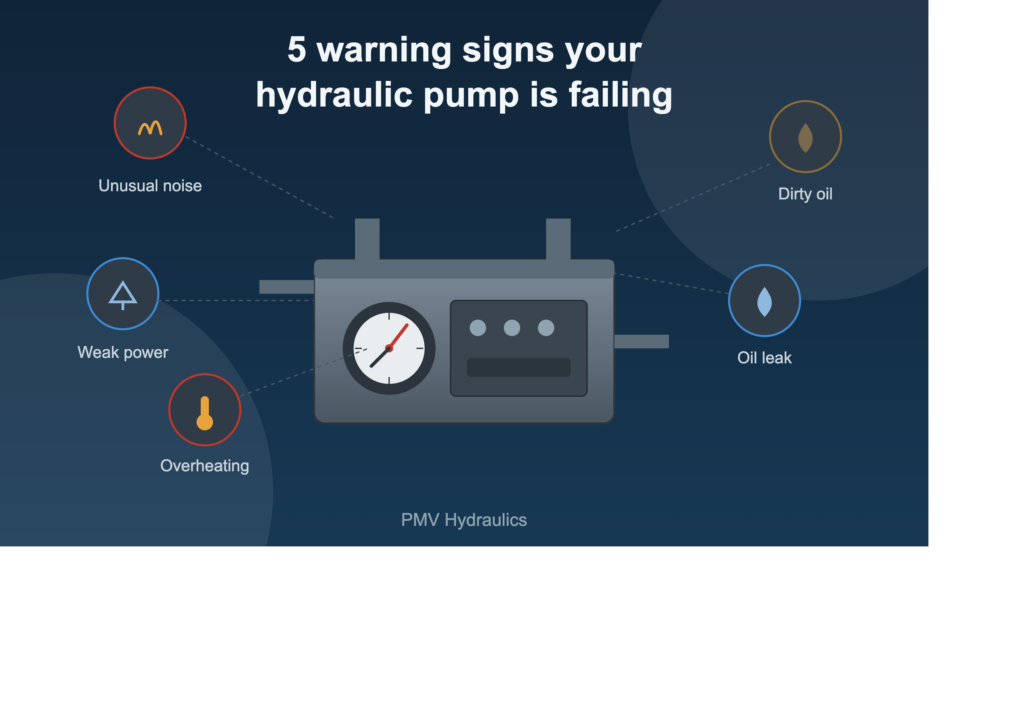
A healthy hydraulic pump runs with a steady, consistent hum. If you start hearing whining, knocking, or a grinding sound, that’s usually a sign of cavitation — air getting into the system where it shouldn’t be — or internal wear on the pump’s moving parts. Cavitation is one of the most common causes of premature pump failure, and it gets worse the longer it runs, so this is not a “wait and see” sign.
2. Slower or Weaker Machine Operation
If your equipment feels sluggish, takes longer to lift, or doesn’t reach full pressure the way it used to, your pump may be losing internal efficiency. This is often due to worn seals or internal components no longer maintaining proper pressure, and it tends to get gradually worse rather than fixing itself.
3. Overheating
Hydraulic systems run warm during normal operation, but a pump or reservoir that’s consistently hot to the touch, or oil temperatures climbing beyond the normal range, usually points to internal friction from worn components, restricted flow, or the wrong oil viscosity for the application. Overheating also accelerates oil breakdown, which compounds the problem.
4. Leaking Oil or Visible Wet Spots
Any oil around seals, fittings, or the pump housing is worth investigating immediately — not just because it’s messy, but because a slow leak often becomes a bigger seal failure, and a system running low on oil is far more prone to cavitation and overheating (see point 1 and 3).
5. Contaminated or Discolored Hydraulic Oil
Clean hydraulic oil should be relatively clear. If it looks milky, dark, or has visible particles, that’s usually contamination — either water ingress or metal particles from internal wear. Contaminated oil doesn’t just signal a problem, it actively causes further damage as it circulates through the system.
What to do if you notice these signs
Catching these signs early is almost always cheaper than waiting for a full breakdown. In many cases, a pump doesn’t need to be replaced — it can be rebuilt or repaired at a fraction of the cost of a new unit, provided the wear hasn’t gone too far. That’s exactly the kind of diagnosis and repair work we handle at PMV Hydraulics for pumps, motors, and valves across Rexroth, Parker, Daikin, Nachi, and other major brands.
If any of the above sounds familiar, it’s worth getting it looked at before it turns into unplanned downtime.
📞 Talk to us: WhatsApp +91-9911797178 or call for a diagnosis.